
Why Am I (or My Husband) Getting Emails From Dating Sites?
Most emails from dating sites are not proof of an account. Ads and spam go to millions of addresses that never signed up. Even a login code proves little: when we tested it in November 2026, Tinder and Badoo each emailed a code to an address that had no account, simply because it was typed into their website. The emails that do point to a real account are password resets and notifications about a named profile. The table below shows how to tell them apart.
- The five kinds of dating site email
- Quick check: what does this email mean?
- What we tested
- Why is my husband or partner getting these emails?
- Why am I getting emails from dating sites?
- How do dating sites get your email?
- How to tell a real email from spam
- How to stop emails from dating sites
- How to check for a real profile
- FAQ
Finding a dating site email in your partner’s inbox, or in your own when you never signed up, is unsettling. Before you decide what it means, look at what kind of email it is. That one detail answers most of the question.
The five kinds of dating site email
| Kind of email | Typical wording | Does it mean an account exists? |
|---|---|---|
| 1. Ads and spam | “Singles near you”, “Someone wants to meet you”, from a site you’ve never heard of | No. Sent in bulk to bought or scraped lists. |
| 2. A login or sign-up code | “Your code is 123456”, “Let’s get you verified” | No. It means someone typed the address into the site. In our test, apps sent codes to addresses with no account. |
| 3. “Welcome” or “confirm your email” | “Welcome to…”, “Confirm your email address” | Someone started a sign-up with that address. It may be a typing mistake by a stranger. |
| 4. A password reset | “Reset your password”, “Here’s your recovery link” | Likely yes. Apps say they send these only when an account exists. |
| 5. Activity notifications | “You have a new match”, “Anna sent you a message”, naming the profile | Likely yes, if it really comes from the app. Spam often copies this style. |
Kinds 1 and 2 are by far the most common, and neither says anything about the person who owns the inbox.
Quick check: what does this email mean?
Pick the description that fits the email best. Nothing you choose is sent anywhere.
What we tested
On November 16, 2026 we typed email addresses that had no dating accounts into the websites of the major dating apps and watched the inboxes.
| What we did | What arrived | Sender we saw |
|---|---|---|
| Chose “Log in with email” on Tinder | A 6-digit code, subject “Let’s get you verified” | noreply@gotinder.com |
| Chose “Continue with email” on Badoo | A 6-digit code, subject “Your code is…”. Our mail provider flagged it as possibly malicious. | hi@badoo.com |
| Asked for account recovery on Tinder | Nothing. The page said “If we found an account… an email has been sent.” | None |
| Asked for a password reset on Match, Plenty of Fish and OkCupid | Nothing, although Match and OkCupid displayed a message saying an email had been sent | None |
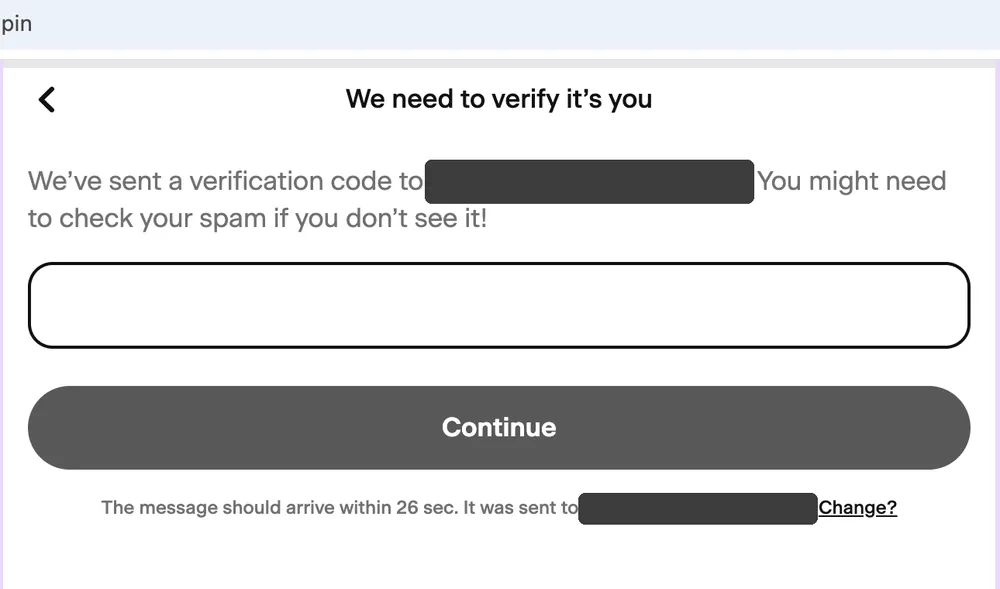
Two things follow. A code email can be triggered by anyone who types an address, including by mistake. And because reset requests for addresses with no account produced no email, a genuine reset email is a stronger sign that an account exists under that address. We tested addresses without accounts only, on the websites, so treat this as a strong hint and not as proof. The full test is on our email search page.
Why is my husband or partner getting these emails?
There are four realistic explanations, from most to least common:
- It’s spam. Dating ads are a common kind of junk mail, and they reach people who have never used a dating site.
- Someone typed his address. A stranger with a similar address made a typing mistake, or somebody entered his email on purpose. As our test shows, that’s enough to produce a code or a welcome email.
- An old account. He signed up years ago, before your relationship, and never deleted the account. Dating sites often keep emailing inactive members to bring them back.
- A current account. Password resets he requested, or notifications about matches and messages on a named profile, point this way.
One email, or a run of ads, is weak evidence. A pattern of activity notifications from one real app is different. If you’re worried, don’t log in to his accounts or his inbox without permission, which is against the law in most countries. Do this instead:
- Note which kind of email it is, using the table above.
- Check the sender’s address and whether the email names a profile.
- Run the usernames he uses through our free cheater finder. A public profile with recent photos tells you far more than an email does.
- Ask him. “I saw this, what is it?” is a fair question, and the answer is usually dull.
If you do find a profile, read what to do if you found your partner on a dating app before the conversation.
Why am I getting emails from dating sites?
If you never signed up, the same list applies to you: spam, someone else’s typing mistake, or an account you forgot. Two more causes are worth knowing:
- Sister sites. Many dating brands belong to the same company. Signing up to one years ago may lead to email from others in the group.
- A similar address. If your address is a common name, people with nearly the same one will sometimes enter yours. With Gmail, dots don’t count: Google treats
jane.smithandjanesmithas the same inbox, so a sign-up with either version reaches you.
Getting these emails doesn’t mean your account or inbox has been hacked. If codes keep arriving that you didn’t request, nobody can log in without the code, so ignore them and never pass a code to anyone.
How do dating sites get your email?
- You gave it to them, or to a related site, at some point.
- Someone else entered it, by mistake or on purpose. Sites email an address to check who owns it. That’s what the code is for.
- Marketing lists. Spammers buy and trade lists of addresses collected from other websites, competitions and data leaks.
- Guessing. Bulk senders also try common names at popular email providers.
The same is true of phone numbers. A text with a code from a dating app means someone typed your number into its login screen.
How to tell a real email from spam
- Check the sender’s address, not the name. Real emails come from the company’s own domain. In our test, Tinder’s came from
gotinder.comand Badoo’s frombadoo.com. A “Tinder” email from a random or misspelled domain is spam or phishing. - Look for a name. Real notifications usually use the first name on the profile. Spam says “Hi there” or uses the email address as a name.
- Hover over the links without clicking. They should lead to the app’s own website.
- Be careful with urgency. “Your account will be closed” and “Confirm your payment” are classic phishing lines.
Don’t click links in an email you don’t trust. If you want to check an account, type the app’s address into your browser yourself.
How to stop emails from dating sites
- From a real site you used: log in and delete the account, not just the app. Unsubscribing stops marketing emails, but only deleting the account ends everything.
- From a real site you never used: use the unsubscribe link at the bottom. In the United States, the CAN-SPAM Act requires companies to honor an opt-out request within 10 business days, according to the FTC.
- From an unknown sender: don’t click anything, including “unsubscribe”. Mark it as spam, which trains your mail provider to filter similar messages, and block the sender.
- Codes you didn’t request: ignore them. If they keep coming from one app, contact its support and ask them to block sign-ups with your address.
- If it never stops: create a filter that sends messages containing words like “singles” or “dating” to a separate folder.
These steps are the same whether the emails come from eHarmony, Zoosk, Plenty of Fish, Match or any other site. If an email asks for money or personal details, report it at ReportFraud.ftc.gov.
How to check for a real profile
An email is indirect evidence. A profile is direct. If you want a clear answer, search for the profile itself:
Search for the profile itself, free
We check Tinder directly and search other dating sites across the web.
- Scan every username the person uses, including the part of their email before the @. Our email search does this for you.
- Search their usual photos with the photo search.
- If something turns up, check whether it’s in use. See how to tell if a profile is active.
FAQ
Why does my husband get emails from dating sites?
Most often it’s spam, which reaches people who never signed up. It can also be a stranger typing his address by mistake, an old account he never deleted, or a current account. Ads and login codes prove nothing. Password resets and notifications about a named profile are the ones that point to a real account.
Does getting emails from dating sites mean you signed up?
No. In our November 2026 test, Tinder and Badoo emailed codes to addresses that had no account, just because the address was typed into their website. Spam also goes to millions of people who never joined.
Why am I getting emails from dating sites I never joined?
Your address is on a marketing list, someone entered it by mistake, or it belongs to an account you forgot. It doesn’t mean your inbox was hacked.
How do dating sites get your email?
Either you or someone else typed it into a sign-up or login form, or it came from marketing lists that spammers buy, trade and collect from other websites and data leaks.
How do I stop emails from dating sites?
For a real site you used, log in and delete the account. For a real site you never used, use the unsubscribe link. For unknown senders, don’t click anything: mark the email as spam and block the sender.
I got a Tinder code I didn’t request. Was my account hacked?
No. A code email means someone typed your address into Tinder’s login. Without the code they can’t get in. Ignore it and never share the code with anyone.
Is it safe to click unsubscribe in a dating spam email?
Only if you’re sure the email comes from a real company. In spam from unknown senders, a click can confirm that your address is active. Mark those as spam instead.
How can I tell if a dating site email is real?
Check the sender’s address, not the display name. Real emails come from the company’s own domain. In our test, Tinder’s came from gotinder.com and Badoo’s from badoo.com.
Can I check if my partner really has a dating profile?
Yes, without touching their accounts. Scan the usernames they use and search their usual photos with our free tools. A public profile with recent photos is much stronger evidence than an email.